I spent part of the morning today, the BIG DAY, making telephone calls to college kids in my precinct for Obama. Most of the people in my neighborhood have already voted, and it's mostly the kids who are waiting until the last minute. It was good to talk to so many, all of whom said they were going to vote or had just returned from voting.
This afternoon, I'm going to be watching the polls for Mahalo.com. We have a network of people set to track polls this afternoon and evening, folks all over the country, with separate pages for each state and we will be watching and getting the exit polls and results listed.
Here's the main pages:
Election Results
Election Exit Polls
Presidential Polls
And I'll be tracking
Iowa: Exit Polls, Election Results
Minnesota: Exit Polls, Election Results
Oklahoma: Exit Polls, Election Results
Illinois: Exit Polls, Election Results
Nebraska: Exit Polls, Election Results
Oregon: Exit Polls, Election Results
And I'm going to be watching these as they change, because I can't miss a battleground state, not one.
Pennsylvania: Exit Polls, Election Results
Florida: Exit Polls, Election Results
New Hampshire: Exit Polls, Election Results
Virginia: Exit Polls, Election Results
Nevada: Exit Polls, Election Results
Indiana: Exit Polls, Election Results
Georgia: Exit Polls, Election Results
West Virginia: Exit Polls, Election Results
North Dakota: Exit Polls, Election Results
Ohio: Exit Polls, Election Results
New Mexico: Exit Polls, Election Results
Missouri: Exit Polls, Election Results
Montana: Exit Polls, Election Results
North Carolina: Exit Polls, Election Results
Colorado: Exit Polls, Election Results
Please feel free to join me. The champagne is on the ice, which we have planned to use as celebration or solace, but --- dare I say it? we are hoping for the former!
Go Obama!
Tuesday, November 04, 2008


Monday, September 29, 2008
A Week in the Life of Mahalo
Working for Mahalo.com is a kick.
One skill I have is synthesis. I can read a bunch of varied resources and synthesize a general public article on archaeology very quickly and, if I do say so, adroitly, pointing it towards an educated adult crowd. But, lately I've wondered if I didn't specialize myself into a corner, by choosing archaeology as the sole topic to write on. Archaeology is really not that marketable---I find it fascinating, and there are several hundred thousand people on the planet that find it fascinating, too. But today there are hundreds of writers and bloggers who write about archaeology, some even more specialized than I am. My archaeology synthetic skills are probably not as useful as they were a decade ago, now that there is Wikipedia in the world: but you do what you do.
Or so I thought. I was a little leery of Mahalo.com, where you must synthesize information on everything from software to celebrity gossip to world news to the financial crisis to the latest bizarro murder case where Mrs. x is stuffed into a suitcase and left in a forest. I've never had to read and synthesize data so fast in my life. Safe to say it's really honing my skills. Here's a list of all the pages I developed in the last week:
http://www.mahalo.com/David_Blaine_Blind
http://www.mahalo.com/Sallie_Krawcheck
http://www.mahalo.com/NYC_Gross_Matchbooks
http://www.mahalo.com/Mikasa_Foods
http://www.mahalo.com/WTC_Center_Pothole
http://www.mahalo.com/Bill_Clinton_On_The_View
http://www.mahalo.com/Latarian_Milton
http://www.mahalo.com/Dave_Hill_Fashion_Week
http://www.mahalo.com/Daniel_Katz
http://www.mahalo.com/Palin_Syrah
http://www.mahalo.com/Dave_Chameides
http://www.mahalo.com/Bill_Perkins_Ad
http://www.mahalo.com/McCain_Press_Conference
http://www.mahalo.com/McCain_Top_Ten_Blowups
http://www.mahalo.com/Presidential_Debate_Drinking_Game
http://www.mahalo.com/Sarah_Palin_Flute
http://www.mahalo.com/Scott_Greenstein
http://www.mahalo.com/Gary_Staton
http://www.mahalo.com/Richard_Millay
http://www.mahalo.com/Emma_Forrest
http://www.mahalo.com/Colin_Farrell_Emma_Forrest
http://www.mahalo.com/Colin_Farrell_Judaism
http://www.mahalo.com/Juan_Antonio_Velez_Gonzalez
http://www.mahalo.com/Brandon_Michael_Soroka
http://www.mahalo.com/Mortgage_Bailout_Plan
http://www.mahalo.com/Stopthehousingbailout.com
http://www.mahalo.com/TPG_Capital
http://www.mahalo.com/Washington_Mutual_JP_Morgan_Sale
http://www.mahalo.com/Taliban_Peace_Plan
http://www.mahalo.com/Sam_Botner
http://www.mahalo.com/Omar_Yoguez_Singu
http://www.mahalo.com/Marcella_Grace_Eiler
http://www.mahalo.com/Global_Electoral_College
http://www.mahalo.com/Drea_Bock
http://www.mahalo.com/Robert_Vezendy
http://www.mahalo.com/Scraper_Bike_Rap
http://www.mahalo.com/Emergency_Economic_Stabilization_Act_of_2008
And compared to many of my colleagues at Mahalo.com I'm a piker!
Oh, I'm not giving up archaeology. I have too much invested in it to just abandon it, and there are still stories I want to tell. But... how good it is to know I don't have to rely on writing about just archaeology to make a living.
One skill I have is synthesis. I can read a bunch of varied resources and synthesize a general public article on archaeology very quickly and, if I do say so, adroitly, pointing it towards an educated adult crowd. But, lately I've wondered if I didn't specialize myself into a corner, by choosing archaeology as the sole topic to write on. Archaeology is really not that marketable---I find it fascinating, and there are several hundred thousand people on the planet that find it fascinating, too. But today there are hundreds of writers and bloggers who write about archaeology, some even more specialized than I am. My archaeology synthetic skills are probably not as useful as they were a decade ago, now that there is Wikipedia in the world: but you do what you do.
Or so I thought. I was a little leery of Mahalo.com, where you must synthesize information on everything from software to celebrity gossip to world news to the financial crisis to the latest bizarro murder case where Mrs. x is stuffed into a suitcase and left in a forest. I've never had to read and synthesize data so fast in my life. Safe to say it's really honing my skills. Here's a list of all the pages I developed in the last week:
http://www.mahalo.com/David_Blaine_Blind
http://www.mahalo.com/Sallie_Krawcheck
http://www.mahalo.com/NYC_Gross_Matchbooks
http://www.mahalo.com/Mikasa_Foods
http://www.mahalo.com/WTC_Center_Pothole
http://www.mahalo.com/Bill_Clinton_On_The_View
http://www.mahalo.com/Latarian_Milton
http://www.mahalo.com/Dave_Hill_Fashion_Week
http://www.mahalo.com/Daniel_Katz
http://www.mahalo.com/Palin_Syrah
http://www.mahalo.com/Dave_Chameides
http://www.mahalo.com/Bill_Perkins_Ad
http://www.mahalo.com/McCain_Press_Conference
http://www.mahalo.com/McCain_Top_Ten_Blowups
http://www.mahalo.com/Presidential_Debate_Drinking_Game
http://www.mahalo.com/Sarah_Palin_Flute
http://www.mahalo.com/Scott_Greenstein
http://www.mahalo.com/Gary_Staton
http://www.mahalo.com/Richard_Millay
http://www.mahalo.com/Emma_Forrest
http://www.mahalo.com/Colin_Farrell_Emma_Forrest
http://www.mahalo.com/Colin_Farrell_Judaism
http://www.mahalo.com/Juan_Antonio_Velez_Gonzalez
http://www.mahalo.com/Brandon_Michael_Soroka
http://www.mahalo.com/Mortgage_Bailout_Plan
http://www.mahalo.com/Stopthehousingbailout.com
http://www.mahalo.com/TPG_Capital
http://www.mahalo.com/Washington_Mutual_JP_Morgan_Sale
http://www.mahalo.com/Taliban_Peace_Plan
http://www.mahalo.com/Sam_Botner
http://www.mahalo.com/Omar_Yoguez_Singu
http://www.mahalo.com/Marcella_Grace_Eiler
http://www.mahalo.com/Global_Electoral_College
http://www.mahalo.com/Drea_Bock
http://www.mahalo.com/Robert_Vezendy
http://www.mahalo.com/Scraper_Bike_Rap
http://www.mahalo.com/Emergency_Economic_Stabilization_Act_of_2008
And compared to many of my colleagues at Mahalo.com I'm a piker!
Oh, I'm not giving up archaeology. I have too much invested in it to just abandon it, and there are still stories I want to tell. But... how good it is to know I don't have to rely on writing about just archaeology to make a living.
Thursday, September 25, 2008
Mahalo, and Thanks to You, Too!
In August I started working part time for Mahalo.com (in addition to the About.com gig), partly because I needed a new challenge and partly in these tough economic times I needed the dough. So far, it's fabulous: I recommend it as a resource and as a job. Here's why:
Did ya notice how impossible it is to find the important bits of a story? You know, there's a news story going around and hard as you try you can only find bloggers of one slant or another ranting about the issue or the same news report published in a dozen different newspapers with slightly different titles. Drives me nuts.
Well, Mahalo has hired a bunch of us to do that research for you. So that, whether you need to know the latest poop on the mortgage bailout crisis or what David Letterman thinks about John McCain bailing on him or if David Blaine is cheating or what Bill Clinton really said on The View, or even who Clay Aiken is dating, somebody at Mahalo has already done the digging for you.
As a place to work, I'm nuts about it. The work is challenging--you have to stay neutral no matter how much of a wonk or wonkette you are--but it's also exhilarating.
So--that's what I've been up to lately. More later...
Did ya notice how impossible it is to find the important bits of a story? You know, there's a news story going around and hard as you try you can only find bloggers of one slant or another ranting about the issue or the same news report published in a dozen different newspapers with slightly different titles. Drives me nuts.
Well, Mahalo has hired a bunch of us to do that research for you. So that, whether you need to know the latest poop on the mortgage bailout crisis or what David Letterman thinks about John McCain bailing on him or if David Blaine is cheating or what Bill Clinton really said on The View, or even who Clay Aiken is dating, somebody at Mahalo has already done the digging for you.
As a place to work, I'm nuts about it. The work is challenging--you have to stay neutral no matter how much of a wonk or wonkette you are--but it's also exhilarating.
So--that's what I've been up to lately. More later...
Saturday, July 19, 2008
Bernard and Doris - Movie of the Week

Bernard and Doris is a fictionalized version of the last six years of the life of billionaire Doris Duke and her butler Bernard Lafferty, to whom she left control of her fortune. Directed by Bob Balaban and starring Susan Sarandon as Doris and Ralph Fiennes as Bernard, the movie is shot primarily from Bernard's point of view.
The movie is supposedly set in her New Jersey mansion, although Balaban says the building is a stand-in: Duke also had mansions in Newport, Hawaii and Beverly Hills, as well as apartments and estates and a jet to take her around the world. Several scenes are set in a greenhouse; Duke was a collector of orchids and established the Doris Duke Gardens at her New Jersey estate, now closed to the public.
Plot Points
Bernard was a gay Irishman, who previously acted as butler for Elizabeth Taylor and Peggy Lee--with Duke making an interesting trio of powerful famous single women. When we first see him, he is driving down a leafy road on his way to replace the previous butler, fired for the crime of serving too-chilly melon. Bernard is obsequious with Doris but commanding with the rest of the staff of maids, cooks and chauffeurs, which is how he survives through the first few months.
Doris meanwhile consumes quantities of alcohol and quantities of young, talented, buff men with a gray insouciance. At the same time she is shown to have been an intelligent investor and donor, tight-fisted with a nickel and yet generous with her charitable donations. She is emotionally connected to no one, and spends much of the movie as a disembodied voice on the phone barking instructions to support her upcoming itinerary.
Together they make an odd pair, Bernard living for the time when he can serve Doris and be her alter-ego, and drinking his way through the months of loneliness between her visits; Doris, when she's around, is alternately connected to him and distant. Ultimately they are in a chilly conspiracy of two.
Bottom Line
Bernard and Doris makes for a sad, if not totally engrossing story. The movie is dreamy and slow, and although that's probably not to everyone's taste, I think it's an intended slowness, illustrating how Balaban imagines life must have been for Bernard, a few weeks of heady involvement serving Miss Duke followed by months and months of solo drinking, waiting for her return.
Extras on the DVD are limited to choice of language, scene skip-through and Balaban discussing the real Duke and Lafferty.
IMDb: Bernard and Doris
HBO Films: Bernard and Doris
PriceGrabber: Bernard and Doris
The photo is of the Duke Gardens, one of several gorgeous photos taken by Nathan Siemers.
Tuesday, April 29, 2008
Update for Nobody
Well, it's been over a year and a half since I posted here. How weird. In the meantime, started a herb garden (presently sitting on our living room floor because of a late spring freeze last night), joined Linked In and started Twittering.
What's new with you?
What's new with you?
Tuesday, February 13, 2007
A Song Not for Now
When I was a little girl, Walt Kelly's Pogo was a mainstay comic in our house. Pogo was a lefty environmentalist cartoon, and a healthy trade off from the horrors of Al Capp's righty (whitey, tighty) Lil Abner; both were in the comic section of our local newspaper (back when 'fair and balanced' meant something, I suppose). I think the possom and his pals of the Ofekenokee Swamp were avatars for our Dad, but for whatever reason, I ended up with a lot of Walt Kelly's ideas, words, images and tunes implanted in odd corners of my brain.
For example, here is a 'quote of the week' I put together for Archaeology.about.com:
Looking back, the view always improves. Maybe that's why I became an archaeologist.
Anyway, so today I was spending a snowy day catching up on reading my blogroll (there are far too many good writers in the world and a whole bunch are writing blogs about anthropology or archaeology), and in BoingBoing was a link to a review of Songs of the Pogo, a collection of songs written by Walt Kelly and published in 1956. I can't remember that we had this album, but I do know that we had the sheet music, because I can sing you all the lyrics to several of them, including my favorite, a sad little tune called "A Song Not For Now". Be glad, be very glad, I don't have a microphone close to hand...
Songs of the Pogo
This link on emusic will let you listen to real singers singing each of the 25 songs written by Kelly.
Here's Cary Doctorow's post on the subject.
Here's another link to some of the songs sung by Beverly Mills.
"A song not for now, you need not put stay
A note for the was can be sung for today
The notes for the does not will do for the does
Today you can sing for the will be that was. "
For example, here is a 'quote of the week' I put together for Archaeology.about.com:
Looking back, the view always improves. Maybe that's why I became an archaeologist.
Anyway, so today I was spending a snowy day catching up on reading my blogroll (there are far too many good writers in the world and a whole bunch are writing blogs about anthropology or archaeology), and in BoingBoing was a link to a review of Songs of the Pogo, a collection of songs written by Walt Kelly and published in 1956. I can't remember that we had this album, but I do know that we had the sheet music, because I can sing you all the lyrics to several of them, including my favorite, a sad little tune called "A Song Not For Now". Be glad, be very glad, I don't have a microphone close to hand...
Songs of the Pogo
This link on emusic will let you listen to real singers singing each of the 25 songs written by Kelly.
Here's Cary Doctorow's post on the subject.
Here's another link to some of the songs sung by Beverly Mills.
"A song not for now, you need not put stay
A note for the was can be sung for today
The notes for the does not will do for the does
Today you can sing for the will be that was. "
Thursday, February 08, 2007
Web 2.0 Explained
I love this video, I ran across it on Lawrence Lessig's blog (where is where the link goes), and he got it from Boing Boing, and originally it came from an anthropology professor at the University of Kansas:
Web 2.0 Explained
This is what geeks like me dreamed of.
Web 2.0 Explained
This is what geeks like me dreamed of.
Monday, January 29, 2007
Squidoo Lens: MegaSudoku
One of my main passions is MegaSudoku, which everybody thinks I'm nuts to do because it looks so hard. But, I was looking for a way to perk my brain up in the middle of a long day of backbreaking labor over letters and grammar, and it turns out that if you play with MegaSudoku, you find it includes a number of tiny little logic puzzles that can be worked on a little at a time.
So, when I heard about Squidoo it seemed like a great place to trot out my theory of MegaSudoku. Here's my new lens:
MegaSudoku for Busy People"
So, when I heard about Squidoo it seemed like a great place to trot out my theory of MegaSudoku. Here's my new lens:
MegaSudoku for Busy People"
Friday, January 26, 2007
Missing Scenes Competition: Oh Susannah!
This is my first entry in the Missing Scenes Competition, which at present is only in the works, but will eventually be on the Wasteflake Site. The rules are to write a scene based on an existing novel, using the characters and implying the situations in the novel. The scene must not exist in the novel, but must be events that are implied in the book, and may have occurred during the action of the novel, or before or after the action of the novel. The scene must include one or more characters in the novel. Additional characters who did not appear in the novel must be a minority; writing yourself in is frowned upon. As soon as Wasteflake gets our act together again, you too can submit a link to your entry, or if you don't have a blog or website, add your story to the Wasteflake wiki.
So, based on Kate Wilhelm's 1980 book Oh, Susannah! , here's my first entry:
---
On the fourteenth floor of an office building overlooking Central Park, a woman sits at a desk working on the galleys of a manuscript. One pencil is shoved into the untidy knot of her grey hair; with another she taps out a calypso beat on the desktop. She rests her chin in her hand, and peers microscopically at the blue printed words on the shiny fibrous paper in front of her. One expensively decorous shoe dangles off the end of her right toe; the other is lost beneath the desk.
The phone rings, and she snakes out one arm to answer it, dropping the pencil and marking her place with her finger.
"Berryman and Associates, this is Sylvia." she says into the receiver.
"Oh, hi Gavin, yes the galleys came this afternoon. I'm reading them now.... Well, I think he's in the middle of something, but let me check."
She punches a button on the phone, putting the caller on hold, and leans over behind her in what she has come to think of as the Rosemary Woods stretch, blindly finding an intercom button and pressing it down. She listens intently.
In another room, no corresponding buzz is made on the similar intercom, because the receiving button is being held in place with Roget's thesaurus for just such an occasion. Sylvia can hear a soft snore through the connection.
"Sorry Gavin, he's pretty busy right now, I'll have him call you back in about, oh 20 minutes or so. Okay, talk to you then."
As Sylvia hangs up the phone she catches the eye of the other occupant of her office; an orange cat, perched regally in the sunshine on a broad windowsill of the penthouse. The cat's ancient Egyptian demeanor is spoiled, somewhat, by the brown ruff of fur standing out awkwardly from its neck and the ninety degree crook in its tail. The cat stares at Sylvia, then jumps from the window sill and walks toward the door. The cat seats himself about two feet from the doorway and closely examines first the doorknob and then the faint light from the hall which glimmers beneath the door.
The phone rings again as Sylvia slews around in her chair and pushes the intercom open. "Mike, they're here!"
So, based on Kate Wilhelm's 1980 book Oh, Susannah!
, here's my first entry:---
On the fourteenth floor of an office building overlooking Central Park, a woman sits at a desk working on the galleys of a manuscript. One pencil is shoved into the untidy knot of her grey hair; with another she taps out a calypso beat on the desktop. She rests her chin in her hand, and peers microscopically at the blue printed words on the shiny fibrous paper in front of her. One expensively decorous shoe dangles off the end of her right toe; the other is lost beneath the desk.
The phone rings, and she snakes out one arm to answer it, dropping the pencil and marking her place with her finger.
"Berryman and Associates, this is Sylvia." she says into the receiver.
"Oh, hi Gavin, yes the galleys came this afternoon. I'm reading them now.... Well, I think he's in the middle of something, but let me check."
She punches a button on the phone, putting the caller on hold, and leans over behind her in what she has come to think of as the Rosemary Woods stretch, blindly finding an intercom button and pressing it down. She listens intently.
In another room, no corresponding buzz is made on the similar intercom, because the receiving button is being held in place with Roget's thesaurus for just such an occasion. Sylvia can hear a soft snore through the connection.
"Sorry Gavin, he's pretty busy right now, I'll have him call you back in about, oh 20 minutes or so. Okay, talk to you then."
As Sylvia hangs up the phone she catches the eye of the other occupant of her office; an orange cat, perched regally in the sunshine on a broad windowsill of the penthouse. The cat's ancient Egyptian demeanor is spoiled, somewhat, by the brown ruff of fur standing out awkwardly from its neck and the ninety degree crook in its tail. The cat stares at Sylvia, then jumps from the window sill and walks toward the door. The cat seats himself about two feet from the doorway and closely examines first the doorknob and then the faint light from the hall which glimmers beneath the door.
The phone rings again as Sylvia slews around in her chair and pushes the intercom open. "Mike, they're here!"
Thursday, January 25, 2007
There was this old man who came to see me
I have a very dear friend who is 94. And today I told her this story, and she wondered why I hadn't written it down. So here is the story, for Gusti.
Last summer I was approached by a young woman whose uncle had written a book. I do manuscript editing on the side now and then, to make ends meet, and the young woman said her uncle's book was a collection of Native American tales and he was interested in getting it published as a historical adventure novel 'some day' and would I meet them for coffee. I said sure, and when I got to the coffee shop, there they were, a young woman in her late 20s with a squirmy three year old and her 75 year old uncle, an old bachelor farmer who lives on his farm in one of the rural corners of my state. Lovingly, he passed over a copy of his manuscript. 450 pages long, it was, but on a CD Rom (not so bulky that way).
When I read this manuscript, or at least began reading this tome, at first I was horrified, because it was so far from what I know to be true about Native American history as to be laughable. On so many levels, this man got it so, so wrong. His book has the glacier retreating and the white men appearing in the space of a single generation (not 10,000 years apart as science tells us). He has Native Americans sitting around a campfire, swapping stories of the mammoth they killed that day and drinking corn whiskey while the women make porcelain tea cups. No. Sorry, no that's very very wrong. But the writing isn't bad, in fact it's quite engaging. And the stories, while not of any Native Americans I've ever known or heard of, and in some respects rather insulting of the true histories of Native Americans, are still stories written based on his life, on his fantastic melding of stories from his own experience and stories he created, whole cloth, out of his imagination.
You see, he'd collected artifacts since he was a little boy, looking for arrowheads and ground stone axes and telling himself stories about them; stories about Indian princesses and tragic love stories and great heroes and noble sacrifices. Except for the time he spent in France during WWII, he'd never left home, never really been far away from the farm on which he now lived, and his stories are deeply ingrained into him, part of the leathery skin and permanent dirty tan of an old farmer. I tried to tell him, gently, that his book was completely wrong in terms of science. But he would have none of it--this is a work of history, he says, and just because I have a fancy degree and work as an archaeologist doesn't make me an expert.
So, I could just say, I'm sorry, I want nothing to do with this error, this set of blunders you want to perpetrate on the public. Except that--the stories are wonderfully flavored elements of his own history, fantasies built of the stories his parents and grandparents told him, stories of his own experiences in France, and the stories that he told himself based on the artifacts he found at home on his farm. It's interesting writing, it's just... not science.
So what is a science-loving archaeo-writer to do? Stall and hope for an inspired solution.
Last summer I was approached by a young woman whose uncle had written a book. I do manuscript editing on the side now and then, to make ends meet, and the young woman said her uncle's book was a collection of Native American tales and he was interested in getting it published as a historical adventure novel 'some day' and would I meet them for coffee. I said sure, and when I got to the coffee shop, there they were, a young woman in her late 20s with a squirmy three year old and her 75 year old uncle, an old bachelor farmer who lives on his farm in one of the rural corners of my state. Lovingly, he passed over a copy of his manuscript. 450 pages long, it was, but on a CD Rom (not so bulky that way).
When I read this manuscript, or at least began reading this tome, at first I was horrified, because it was so far from what I know to be true about Native American history as to be laughable. On so many levels, this man got it so, so wrong. His book has the glacier retreating and the white men appearing in the space of a single generation (not 10,000 years apart as science tells us). He has Native Americans sitting around a campfire, swapping stories of the mammoth they killed that day and drinking corn whiskey while the women make porcelain tea cups. No. Sorry, no that's very very wrong. But the writing isn't bad, in fact it's quite engaging. And the stories, while not of any Native Americans I've ever known or heard of, and in some respects rather insulting of the true histories of Native Americans, are still stories written based on his life, on his fantastic melding of stories from his own experience and stories he created, whole cloth, out of his imagination.
You see, he'd collected artifacts since he was a little boy, looking for arrowheads and ground stone axes and telling himself stories about them; stories about Indian princesses and tragic love stories and great heroes and noble sacrifices. Except for the time he spent in France during WWII, he'd never left home, never really been far away from the farm on which he now lived, and his stories are deeply ingrained into him, part of the leathery skin and permanent dirty tan of an old farmer. I tried to tell him, gently, that his book was completely wrong in terms of science. But he would have none of it--this is a work of history, he says, and just because I have a fancy degree and work as an archaeologist doesn't make me an expert.
So, I could just say, I'm sorry, I want nothing to do with this error, this set of blunders you want to perpetrate on the public. Except that--the stories are wonderfully flavored elements of his own history, fantasies built of the stories his parents and grandparents told him, stories of his own experiences in France, and the stories that he told himself based on the artifacts he found at home on his farm. It's interesting writing, it's just... not science.
So what is a science-loving archaeo-writer to do? Stall and hope for an inspired solution.
Monday, January 22, 2007
The End of Mr. Y
This is really a terrific book, written by Scarlett Thomas and published in 2006 by Harcourt Press. I can't remember the last time I read a book that drew me in so securely I didn't want to stop reading. The plot is about a graduate student in Oxbridge named Ariel Mantu (except that's a pseudonym), working on a comparative lit doctoral dissertation, partly on an obscure science writer from the 19th century named Thomas Lumas. Lumas's last book was called The End of Mr. Y, and it disappeared shortly after being published. Lumas himself died the day it was published, and all of the people associated with the publication died shortly thereafter.
Ariel finds the book, of course. The rest of the plot is so unusual, mixing time travel and evolution and deconstructionism, and fantasy and all kinds of good and bad surprises with images from several. Lots of fun for fans of Jacques Derrida and Samuel Butler; and an interesting introduction to the ideas. There is a pun in the title, in fact there are puns and hints about what is going on throughout the book, and The End of Mr. Y is simply a fascinating puzzle that is thoroughly enjoyable.
, Scarlett Thomas, Harcourt Press. 2006.
science fiction, scarlett thomas, books, jacques derrida, samuel butler
Ariel finds the book, of course. The rest of the plot is so unusual, mixing time travel and evolution and deconstructionism, and fantasy and all kinds of good and bad surprises with images from several. Lots of fun for fans of Jacques Derrida and Samuel Butler; and an interesting introduction to the ideas. There is a pun in the title, in fact there are puns and hints about what is going on throughout the book, and The End of Mr. Y is simply a fascinating puzzle that is thoroughly enjoyable.
, Scarlett Thomas, Harcourt Press. 2006.
science fiction, scarlett thomas, books, jacques derrida, samuel butler
Saturday, August 26, 2006
An Uncontrollable Urge to Dance
I have taken on an impossible task. Details don't really matter, but it's an amazing bit of egocentric bravado that I agreed to do it, in fact volunteered to do it.
Not that I can't or won't do it, it's just good for me to write 'this is impossible' so that I can avoid working on it for a few moments.
The Word-A-Day is one of my private passions, and yesterday's word was Tarantism, which Anu Garg defines as "an uncontrollable urge to dance." Oddly enough, this strange word related both to tarantella and tarantula more or less sums up my present state of mind: being bit by the spider of ego and dancing until I drop dead to meet the challenge.
Tarantism
Not that I can't or won't do it, it's just good for me to write 'this is impossible' so that I can avoid working on it for a few moments.
The Word-A-Day is one of my private passions, and yesterday's word was Tarantism, which Anu Garg defines as "an uncontrollable urge to dance." Oddly enough, this strange word related both to tarantella and tarantula more or less sums up my present state of mind: being bit by the spider of ego and dancing until I drop dead to meet the challenge.
Tarantism
Tuesday, August 22, 2006
Science Writing and the Scientist
I've taken a bit of a respite here, although I've been blogging like mad on my About site. I guess, I've been trying to figure out what kind of science writer I really am. I discovered (if you'll pardon a bit of navel-gazing) that I don't do very well as a standard science writer for a number of reasons.
First, the process is too slow for me. To get an article into Science or any other traditional venue for that matter, one must pitch a story, and then wait for an editor's okay to proceed. My science writer pals (lucky me, I get to say that now) assure me that only a chump starts a story without a paycheck in the offing. So, I wait a couple of days for the okay, then I start reading, making phone calls and mulling it over in my little brain. My oeuvre of choice is 500-800 words, that's where I'm most comfortable, but Science really only wants 250, so I whittle and whittle and whittle and then submit, and the editor says "I don't really understand" so I send them the long version and then they edit it down to 250 words that no longer express the story, so it's back and forth for awhile until everybody hates everybody else.
Now, if I post on my own website, I hear about the story and get right to work, it can be as long as I like and I can go with the comments I can get. Not as much status (I write for Science! makes for good bragging), and working with an editor is a great pleasure and a relief to share the burden I have to admit; but you know what, I've been spoiled by my About gig.
Secondly, I don't think I'm detached enough from archaeology to write well as a standard science writer. Which is definitely counter-intuitive, don't ya think? Science writing is all about putting things in the simplest format, in the shortest, punchiest format, and because I'm an archaeologist, I don't think the majority of archaeology does really well in a sound byte. In fact, that's why I got interested in doing this, because I'm sick of sound-byte archaeology stories.
It's as if you're doing a crossword puzzle, zipping right along, and then there's that one clue that's in your field of expertise, like 'artifact' for me, and there are so many possible answers you have to fill in all the adjacent spots before you get to the one simple five-letter word that the puzzle master had in mind: sherd.
Most archaeology issues are too complicated to express in 250 words. At least I think.
Anyway, enough navel-gazing. Back to work!
Tags:
archaeology, science, writing, science writing
First, the process is too slow for me. To get an article into Science or any other traditional venue for that matter, one must pitch a story, and then wait for an editor's okay to proceed. My science writer pals (lucky me, I get to say that now) assure me that only a chump starts a story without a paycheck in the offing. So, I wait a couple of days for the okay, then I start reading, making phone calls and mulling it over in my little brain. My oeuvre of choice is 500-800 words, that's where I'm most comfortable, but Science really only wants 250, so I whittle and whittle and whittle and then submit, and the editor says "I don't really understand" so I send them the long version and then they edit it down to 250 words that no longer express the story, so it's back and forth for awhile until everybody hates everybody else.
Now, if I post on my own website, I hear about the story and get right to work, it can be as long as I like and I can go with the comments I can get. Not as much status (I write for Science! makes for good bragging), and working with an editor is a great pleasure and a relief to share the burden I have to admit; but you know what, I've been spoiled by my About gig.
Secondly, I don't think I'm detached enough from archaeology to write well as a standard science writer. Which is definitely counter-intuitive, don't ya think? Science writing is all about putting things in the simplest format, in the shortest, punchiest format, and because I'm an archaeologist, I don't think the majority of archaeology does really well in a sound byte. In fact, that's why I got interested in doing this, because I'm sick of sound-byte archaeology stories.
It's as if you're doing a crossword puzzle, zipping right along, and then there's that one clue that's in your field of expertise, like 'artifact' for me, and there are so many possible answers you have to fill in all the adjacent spots before you get to the one simple five-letter word that the puzzle master had in mind: sherd.
Most archaeology issues are too complicated to express in 250 words. At least I think.
Anyway, enough navel-gazing. Back to work!
Tags:
archaeology, science, writing, science writing
Friday, April 14, 2006
Tornadoes in Iowa City
As I sit in my basement office this morning I can hear the helicopters overhead, news reporters overlooking the damage to my beloved home city of Iowa City. My husband and I suffered neither loss of roof nor electricity, but about 8:30 last night we heard the freight train pass by about a mile away from us as it tore the roof off the local Menard's. My husband is crushed at the news of damage to his home-away-from-home. Some amount of hail fell in the region; we got about 3/4 inch-sized (safely stowed in the freezer for future generations of... well, what are we supposed to do with it?), although the local news included images of pale hands half-hidden by round white icy soft balls.
Also lost in the storm was old St. Pat's church; I was there last for Grady's funeral (a personal loss of years gone by that I feel compelled to mention, a gentle man and barkeep). And the Alpha Chi Omega sorority house, once an annual source of rush week entertainment when I lived across the street some thirty years ago; and the Dairy Queen on Riverside where we often developed brain freeze.
The valiant local Public Access TV ditched all of their programming to bring phoned-in status reports and video coverage of the damage, despite the fact that announcer Brad Laborman knew his apartment had been damaged. The video coverage was truly amazing, both of the storm itself and the aftermath, when thousands of students wandered downtown gawping at the wreckage.
The town is battered, a little, but we're going to be alright. About twenty people ended up (at least temporarily) in the hospital, a state of emergency has been declared in the city, and some of our landmarks have been damaged or destroyed, but by and large, we are okay.
The Press-Citizen has some photos, and PATV has some of their remarkable video uploaded.
Tornadoes, Iowa City, Public Access Television.
Also lost in the storm was old St. Pat's church; I was there last for Grady's funeral (a personal loss of years gone by that I feel compelled to mention, a gentle man and barkeep). And the Alpha Chi Omega sorority house, once an annual source of rush week entertainment when I lived across the street some thirty years ago; and the Dairy Queen on Riverside where we often developed brain freeze.
The valiant local Public Access TV ditched all of their programming to bring phoned-in status reports and video coverage of the damage, despite the fact that announcer Brad Laborman knew his apartment had been damaged. The video coverage was truly amazing, both of the storm itself and the aftermath, when thousands of students wandered downtown gawping at the wreckage.
The town is battered, a little, but we're going to be alright. About twenty people ended up (at least temporarily) in the hospital, a state of emergency has been declared in the city, and some of our landmarks have been damaged or destroyed, but by and large, we are okay.
The Press-Citizen has some photos, and PATV has some of their remarkable video uploaded.
Tornadoes, Iowa City, Public Access Television.
Monday, April 10, 2006
Athlete in the Family
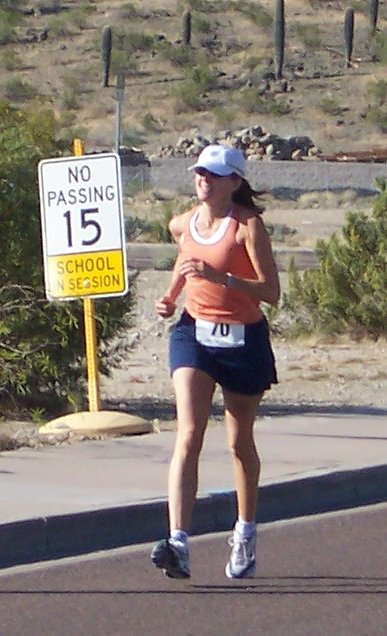
This is a photograph of my marathon-runner sister, the very first member of our family who can honestly claim to be an athlete. The rest of us are poky fat old bookworms and computer nerds that have to push the cobwebs away from our doors if we want to go outside. Way to go, sis!
Tags: Athletes, Running
Tuesday, April 04, 2006
Readings: Archaeology at Strangways Springs Sheep Station
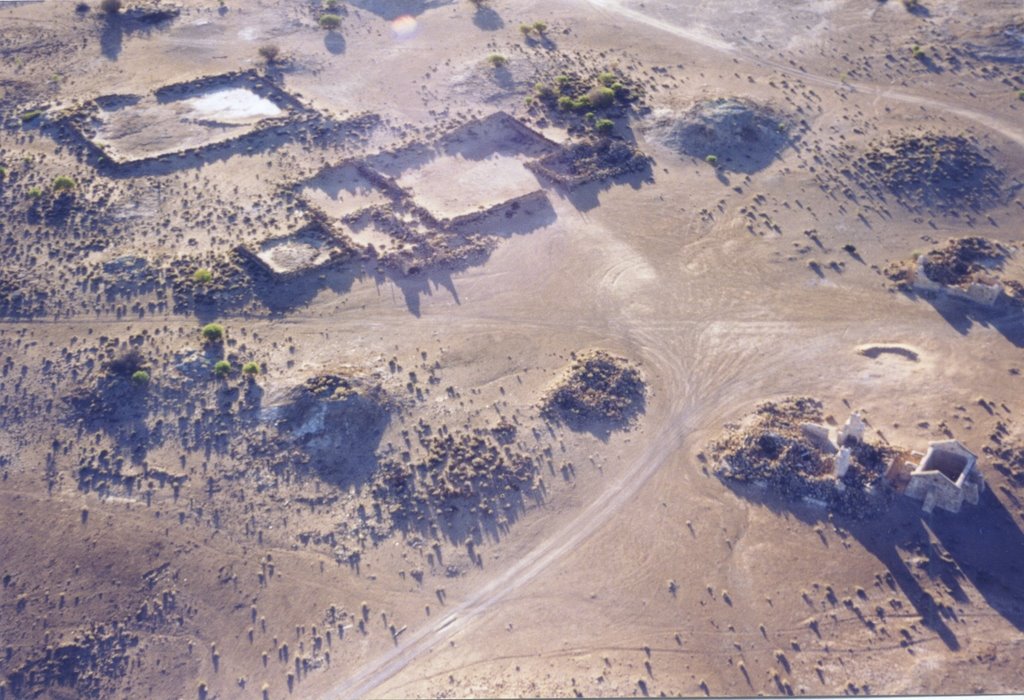
Readings: Archaeology at Strangways Springs Sheep Station
This article is on archaeological investigations at a sheep station (basically a ranch) in the central Australian outback. The original article was written by Alistair Paterson and published in Historical Archaeology, and he was kind enough to let me use the photographs from his excavations. I've never been to the outback, but his report brought the life of sheep herders (black and white) in the late 19th century to life.
Tags: Archaeology, Australia, Farming
Newswise | It's An Exciting Time to be a Journalist - Even With the Challenges
Newswise | It's An Exciting Time to be a Journalist - Even With the Challenges
Or so says the Dean of Journalism at the University of Maryland in this interview. Journalists must be 'willing to embrace new technology'. For me, it is an exciting time to morph from an archaeologist into a journalist; terrifying even if I'm not in a war or poking into some congressional or presidential wrongdoing. Which stories do you follow? How do you keep your objectivity? And, that perennial favorite--what was wrong with having a full time job?
Science writing, Journalism
Or so says the Dean of Journalism at the University of Maryland in this interview. Journalists must be 'willing to embrace new technology'. For me, it is an exciting time to morph from an archaeologist into a journalist; terrifying even if I'm not in a war or poking into some congressional or presidential wrongdoing. Which stories do you follow? How do you keep your objectivity? And, that perennial favorite--what was wrong with having a full time job?
Science writing, Journalism
Saturday, April 01, 2006
ASIFA-Hollywood Animation Archive Project Blog: Media: Ralph Bakshi's Phone Doodles
ASIFA-Hollywood Animation Archive Project Blog: Media: Ralph Bakshi's Phone Doodles
Ralph Backshi is one of my heroes; when I was in college his 'Lord of the Rings' was flat-out amazing animation. Blogger A-Haa has a stash of Ralph Bakshi phone doodles. What a hoot!
Oops - forgot to say this is via Boing Boing, fast becoming my favorite blog site.
Ralph Backshi is one of my heroes; when I was in college his 'Lord of the Rings' was flat-out amazing animation. Blogger A-Haa has a stash of Ralph Bakshi phone doodles. What a hoot!
Oops - forgot to say this is via Boing Boing, fast becoming my favorite blog site.
Wednesday, March 22, 2006
The Irritable Heart: Increased Risk of Physical and Psychological Effects of Trauma in Civil War Veterans

The Irritable Heart: Increased Risk of Physical and Psychological Effects of Trauma in Civil War Veterans
The Irritable Heart is based on work that used American Civil War records to track mental and physical problems of veterans. Doctors of the time noticed that there was a problem experienced by veterans resulting from their traumatic experiences, they called it 'irritable heart'. Researchers led by Roxane Cohen Silver at Irvine used the federally-funded database called Early Indicators of Later Work Levels, Disease, and Death Project, which is free and available to anybody who wants to poke around in it.
This article came about because I'm trying to become a 'real' science writer. The article is based on a report in the Archives of General Psychiatry, and no I don't normally read that journal, but I do get announcements of papers to be published. That's part of being a 'science writer' (although I have to giggle nervously when I refer to myself as such, which is what I did when I said I was an 'archaeologist' so that's only fittin').
Anyway I got the announcement of this paper and wheedled Science magazine's Random Samples column editor into letting me write a piece for that, which was published last month. I ended up writing a much longer piece than was needed for Science, and wanted to publish it someplace. Of course, it's not really archaeology, so the psychology guide at About was kind enough to let me publish it on her site. And voila!
Sometimes I feel like the luckiest dame in the world.
The photograph is of wounded soldiers being tended in the field after the Battle of Chancellorsville near Fredericksburg, Va., May 2, 1863, negative number 111-B-349, and available with a raft of others at the National Archives website.
Tags: Civil War, Post-Traumatic Stress Syndrome, Psychology, History, Archaeology, Writing
Saturday, March 18, 2006
Salon.com Books | Remembering Octavia Butler
Salon.com Books | Remembering Octavia Butler
Science fiction writer Karen Joy Fowler discusses Octavia Butler and her fiction in an article on Salon this week. Fowler describes several of her favorite Butler stories, and discusses what they meant to her. Part of her discussion implies (and the posted comments explicitly consider) how intimately you should know and think about the writer when reading a piece of fiction. I dunno; I'm sort of split on it. One of the reasons I bolted the study of literature as a career was because I felt there was too much emphasis on dissecting pieces of work using bits of the author's biography. In the 1970s when I was in school, we were supposed to use an author's bio to seek out meaningful references in the work--even if (maybe especially if) the author wasn't aware of the meanings. This kind of a one-upmanship of a hard-working writer creeped me out badly. So I bailed.
But on the other hand, one of the reasons I loved Octavia Butler is that she was a female African American science fiction writer (and a lesbian, although I wasn't aware of that until after her death). I thought Butler had some interesting things to say that the largely white male scifi establishment didn't (said with loving respect, however, to Arthur C. Clarke, Asimov, Bradbury and that stinker Harlan Ellison, among many others).
So, maybe there's a happy medium. We can take pleasure in an author's difference without dissecting his or her work. I vote for that; or at least I'm going to be doing that, thank you very much.
Tags: Octavia Butler, Science Fiction, Archaeology, Literature, Gender
Science fiction writer Karen Joy Fowler discusses Octavia Butler and her fiction in an article on Salon this week. Fowler describes several of her favorite Butler stories, and discusses what they meant to her. Part of her discussion implies (and the posted comments explicitly consider) how intimately you should know and think about the writer when reading a piece of fiction. I dunno; I'm sort of split on it. One of the reasons I bolted the study of literature as a career was because I felt there was too much emphasis on dissecting pieces of work using bits of the author's biography. In the 1970s when I was in school, we were supposed to use an author's bio to seek out meaningful references in the work--even if (maybe especially if) the author wasn't aware of the meanings. This kind of a one-upmanship of a hard-working writer creeped me out badly. So I bailed.
But on the other hand, one of the reasons I loved Octavia Butler is that she was a female African American science fiction writer (and a lesbian, although I wasn't aware of that until after her death). I thought Butler had some interesting things to say that the largely white male scifi establishment didn't (said with loving respect, however, to Arthur C. Clarke, Asimov, Bradbury and that stinker Harlan Ellison, among many others).
So, maybe there's a happy medium. We can take pleasure in an author's difference without dissecting his or her work. I vote for that; or at least I'm going to be doing that, thank you very much.
Tags: Octavia Butler, Science Fiction, Archaeology, Literature, Gender
Subscribe to:
Posts (Atom)